Category: Uncategorized

  • What Did the Church Lose When Every Service Became Content?

    What Did the Church Lose When Every Service Became Content?

    Black faith and culture has always held a tension between public witness and protected encounter. In Bonnerfide Conversations, that tension comes into focus through one hard question: what did the church lose when every service became content?

    Something sacred was lost.

    Not because cameras are evil.

    Because not every move of God is meant for display.

    What the Sanctuary Was Meant to Protect

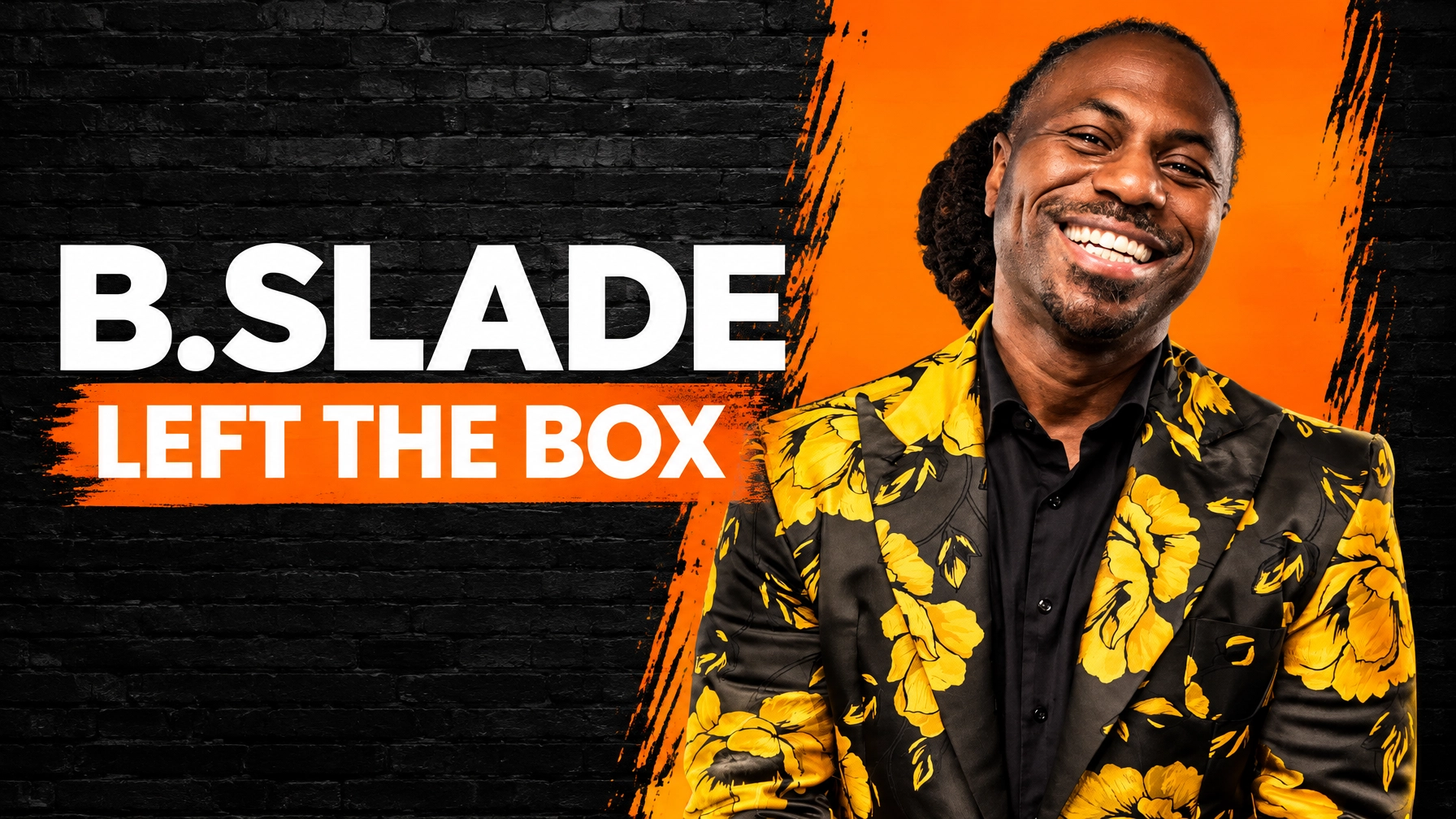
    B.Slade makes the case with unusual clarity. The sanctuary, for him, was the one place cameras could not see him, surveillance could not see him, and his phone was not his leash. That is not nostalgia talking. That is someone naming what protected space once felt like.

    Then he sharpens the point.

    He talks about the “deity of Disney.” Disney will not let you film at Aladdin, yet the church records everything. The comparison sounds simple at first. It is not. He is asking why entertainment corporations guard atmosphere more carefully than sanctuaries guard sacred encounter.

    His answer is not anti-technology.

    It is about discernment.

    “However, this is a sanctuary.”

    That line carries the whole burden of the argument. A sanctuary is not just a room with pews and lights. It is a place set apart. A place where vulnerability should not be turned into spectacle. A place where a person can break, weep, release, repent, or recover without wondering whether the moment will be clipped, reposted, mocked, or misunderstood.

    That is why his hospital analogy lands with such force.

    Everybody can come to the hospital. But only qualified hands go into the operating room.

    The point is not exclusion for its own sake. The point is protection. Access and exposure are not the same thing. A church can welcome people without making every sacred moment public property.

    B.Slade even offers a better way.

    He proposes a Spirit-filled, discerning audio-visual crew. People mature enough to know what should and should not be seen. People who understand that documenting a service and exposing a soul are not the same act.

    That distinction matters.

    Especially now.

    Quote card reading: “However, this is a sanctuary.”

    Bonnerfide Conversations, Black Faith and Culture, and the Cost of Exposure

    This argument matters because black faith and culture has never been only about presentation. It has also been about refuge. The sanctuary was one of the last places where people could come undone before God without being managed by an algorithm or followed by a lens.

    B.Slade warns that the breakthroughs would be so much more intense if people did not think they would be made fun of.

    That line should stop us.

    Because it means the issue is not just production value. It is trust. If people think their most vulnerable moment might become internet material, they will protect themselves. They will hold back. They will perform composure instead of surrender.

    And then something deeper gets lost.

    Deliverance.

    Quote card reading: “Praise is one thing, deliverance is quite another.”

    B.Slade draws a clear line between the two. Praise can be visible. It can be musical. It can be structured. Deliverance is different. Deliverance is costly. It can be loud, messy, disorienting, and deeply private all at once. A church that has room for praise but no room for protected breakthrough has not solved a problem. It has hidden one.

    That is where the second half of his argument comes in.

    The Testimony the Church Stopped Making Room For

    B.Slade does not only grieve the camera. He grieves the loss of testimony service.

    His reasoning is pastoral and piercing. People can sound good and look good and still be bound because they cannot testify. In his words: “That’s why you’re depressed. You haven’t testified.”

    That is not a throwaway line.

    It is a theology of release.

    Testimony does something performance cannot do. It lets ordinary people name what God has done in ordinary language. It takes faith out of abstraction and gives it a face, a voice, and a history. A lay member standing up to say what God brought them through can make God more accessible to the room.

    If You did it for him, I know You’ll do this for me.

    That is how testimony builds community. It turns one person’s survival into another person’s hope. It reminds the room that God still moves among people without microphones, titles, and platforms.

    And sometimes, that kind of testimony can carry so much weight that you no longer need the choir or the preacher.

    Not because order no longer matters.

    Because encounter has already done the work.

    Order Without Deadness

    B.Slade is careful not to romanticize the past. That matters too.

    He is not calling for chaos. He is not attacking the church. He is not even attacking cameras themselves. He is arguing for protected sacred space inside a church that still believes God likes order.

    Line upon line.

    Precept upon precept.

    That is why this cannot be reduced to an anti-technology complaint. The question is not whether churches should use tools. The question is whether tools have started ruling spaces that once belonged to discernment. The question is whether order has become image management. The question is whether the need to capture everything has weakened the church’s ability to cover people while God is dealing with them.

    That is a different concern.

    And a necessary one.

    Quote card reading: “That's why you're depressed. You haven't testified.”

    What This Demands of Us

    For readers living at the intersection of faith and culture, B.Slade’s argument reaches beyond church media teams and worship formats.

    It asks whether we still know how to protect what is sacred.

    It asks whether we have confused visibility with victory.

    It asks what happens when a breakthrough is performed before it is processed.

    Some things should be witnessed.

    Some things should be covered.

    Some things should be shared only after they have healed enough to be spoken.

    That is not fear.

    That is wisdom.

    The conversation that sparked this reflection comes from this episode of Bonnerfide Conversations. A second part continues the broader discussion and turns toward B.Slade’s new music.

    At Bonnerfide, we believe meaningful conversation should make room for both truth and protection.

    Because faith is not content first.

    And breakthrough is not a performance.
  • You Can’t Graduate From a Place You Keep Re-Enrolling In

    You Can’t Graduate From a Place You Keep Re-Enrolling In

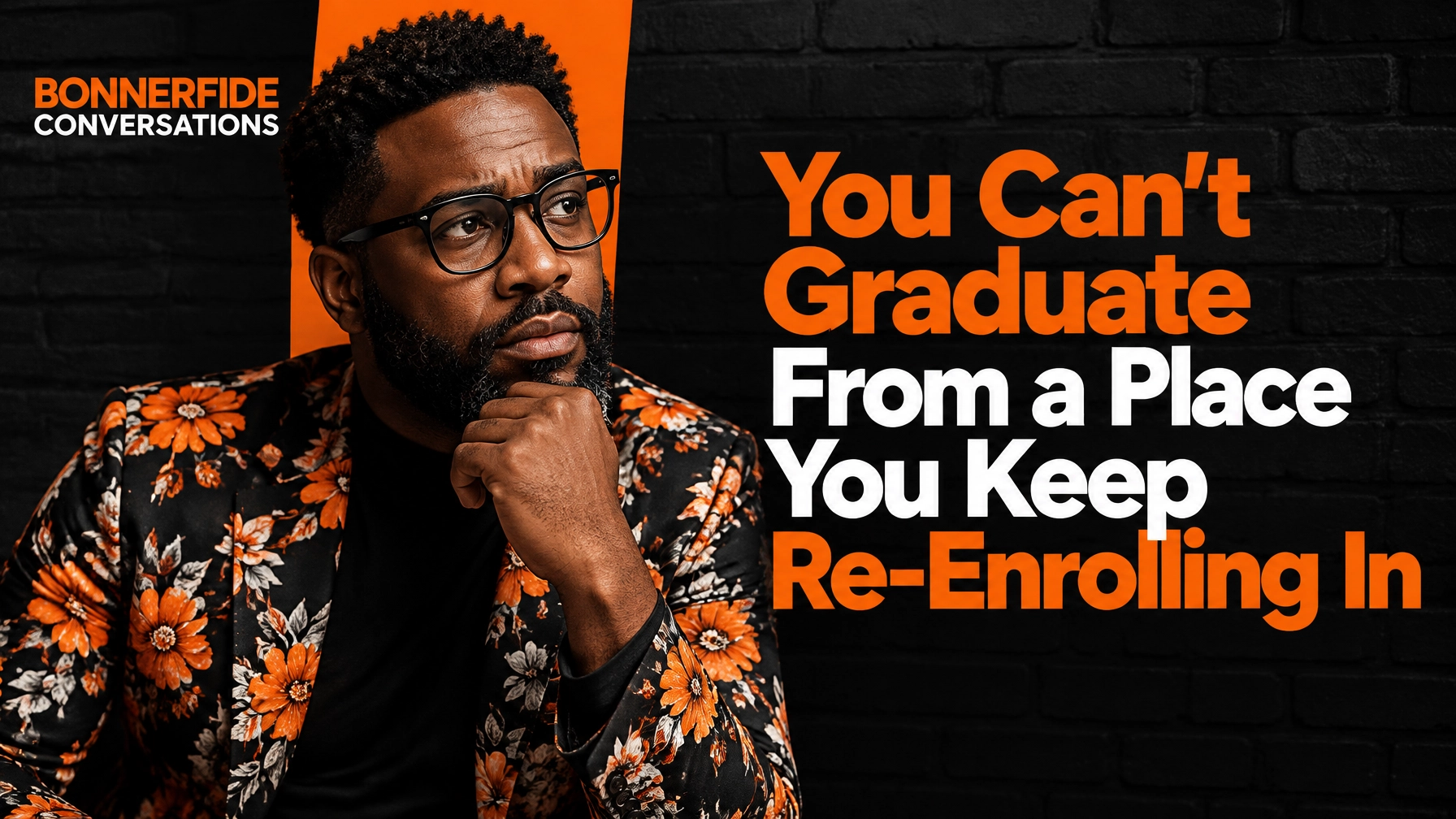
    In Bonnerfide Conversations, black faith and culture is never treated like a slogan. It is lived through decisions, seasons, and what we refuse to outgrow. This thread connects Episode 039 and Episode 040 around one hard truth: you cannot graduate from a place you keep re-enrolling in.

    That is the issue.

    Gerard opens one side of this conversation with a deeply human fact. Sometimes you are making decisions with inherited information you do not even know you have. He talks about his gallbladder surgery and later learning the issue ran through his family. His mother had dealt with it. Both brothers had too. That changed the frame. What looked like isolated decisions sat inside a larger story.

    Origins matter.

    Some decisions come from preference. Others come from patterns you inherited, absorbed, or survived. If you never examine the origin, you may keep defending choices that were never fully yours. You may call it loyalty when it is really conditioning. You may call it patience when it is fear.

    And fear is persuasive.

    Black Faith and Culture, Graduation, and the Cost of Staying

    One of the strongest ideas running through these conversations is this: we often honor institutions more than what those institutions are supposed to produce. A church. A marriage. A job. A friendship. A role. A title. We stay because of what it means, not because of what it is doing.

    That kind of loyalty can become self-betrayal.

    Gerard presses on the approval trap with precision. There is wisdom in counsel. There is safety in listening. But counsel is not permission. If you keep waiting for someone else to authorize your next step, your life will stay parked at the point of their comfort.

    Nothing moves.

    His college story makes that point land. He wanted out of Monticello. He applied to Virginia schools. His parents gave him a narrow choice. There was no money saved for the path he wanted. He paid his own application fees. Then, the Sunday before graduation, he finally told God he would submit to staying if that was the answer. The very next day, Virginia Union's acceptance arrived with a full presidential scholarship.

    That moment did not just open a door. It taught him he could trust his own decision-making process.

    When a Decision Needs Another Decision

    People often act like one bad choice has to become a life sentence. Gerard rejects that completely. He says what many people need to hear in plain language.

    If you made a choice that was not favorable, the solution to that is to make another choice. — Gerard Bonner

    Not a dramatic collapse. Not a ten-step identity crisis. Another choice.

    Better informed. More honest. More awake.

    That matters because decisions compound. A breakfast habit shapes a body over time. A tolerated pattern shapes a life. A delayed conversation shapes a relationship. What looks small today can become structural tomorrow. Some things, like a seed or a cake, take time before they reveal what they are. But not forever. At some point, the fruit tells the truth.

    So does the pattern.

    If your life keeps giving you the same signal, stop ignoring it. We trust a GPS enough to take the detour when the route changes. Yet many people refuse to pivot when life makes it plain they are headed the wrong way. They stay committed to the first decision simply because it was the first one.

    That is not strength. That is stagnation.

    Impact Is Bigger Than Metrics, but Patterns Still Preach

    The second half of this thread deepens the stakes. In Episode 040, Gerard wears a Hillman shirt and builds from A Different World. A spinoff of a spinoff ran for six seasons, and decades later it still holds enough cultural power to earn a reboot. No one involved could have fully measured that reach while it was happening.

    That is impact.

    You do not always know who is carrying what you said. You do not always know who remembers your name. Gerard tells the story of seeing a former student in a store who knew exactly who he was. That is the kind of influence numbers cannot count. The visible metric is not the whole story.

    But neither is the visible moment.

    He brings up Leon Lett, his cousin, and the hard lesson attached to a public mistake. A full career can get buried beneath one crash out if that is the image people keep. That warning is not about perfection. It is about stewardship. Do not become the person who keeps letting one unmanaged response rewrite everything else.

    Because people are watching.

    Your Emotions Can Talk, but They Cannot Drive

    Gerard says it cleanly.

    Your emotions are supposed to inform you, not guide you. — Gerard Bonner

    That line carries weight because it is practical. Emotions tell you something is happening. They are data. They are not a steering wheel. If you let every feeling make a final decision, you will keep re-enrolling in rooms you should have graduated from and exploding in moments that should have passed quietly.

    He grounds that lesson in daily life. Friends called out how he talked in traffic. They called out what happened when he got hangry. He adjusted. Not because image management demanded it, but because other people should not suffer for what they did not cause.

    That is maturity.

    E + R = O. Event plus response equals outcome. You do not control every event. You do control your response. And over time, your responses become your reputation. A single bad moment may not define a person. Gerard makes room for that. But repeated lateness, unanswered texts, and ignored calls stop being moments. They become a movie.

    And people build a case from the movie.

    Re-Enrolling Is Also a Decision

    This is where the two episodes lock together.

    Episode 039 gives the diagnosis. Many people stay loyal to what is killing them because they refuse to revisit a decision. They honor the institution over their own becoming. They wait for permission. They blame others for choices they kept making.

    Episode 040 gives the stakes. Your patterns are visible. Your reach is larger than you know. And staying too long becomes part of the story people tell about you, and the story you start telling yourself.

    Together, they make one case.

    The person who cannot make a decision is often the same person who cannot graduate.

    Re-enrolling is still an act of choice. So is staying. So is silence. So is postponement. Not every ending needs a catastrophe. The world does not have to blow up for you to admit a season is over. In fact, leaving well may preserve what staying would destroy. Someone can be a bad boss and still become a good colleague. A bad spouse and still become a good co-parent. Peaceful exits are still exits.

    And sometimes they are the most faithful kind.

    You Did Not Spend Time There to Stay There

    Gerard lands this theme with the image of graduation and the warning of the Israelites. An 11-day journey became 40 years because the lesson did not take. That is what happens when people keep circling a classroom they were meant to leave.

    You didn't spend time at that school to stay at that school. — Gerard Bonner

    That line reaches far beyond education. It speaks to every environment that trained you, fed you, tested you, and then expired. There are places that were holy for a season and harmful after that season. There are rooms that taught you exactly what you needed and still cannot hold who you are becoming.

    You do not dishonor the lesson by graduating from it.

    You honor it by carrying it forward.

    And that is where the milk line closes the case. The same milk that does your body good, when it stays too long, can be toxic and poison. Staying past the season does not protect you. It turns you bitter.

    Graduate.

  • Why Independent Black Storytelling Will Change the Way You View Culture

    Why Independent Black Storytelling Will Change the Way You View Culture

    For too long, the narratives of Black faith and culture have been filtered through lenses that do not belong to us. We have seen our stories edited. We have seen our values diluted. We have seen our complexity reduced to soundbites. This is where independent black storytelling becomes a revolutionary act of reclaiming the truth.

    At the Bonnerfide Podcast Network, we believe that who tells the story matters just as much as the story itself. Independence is not just about ownership. It is about the freedom to be authentic. It is about the courage to explore the intersections of faith, leadership, and community without permission.

    When we control the narrative, we change the culture. We shift the focus from what is expected to what is essential. This shift is happening right now.

    The Power of Owning the Narrative

    Mainstream media often views Black experiences as a monolith. They miss the nuance. They ignore the deep spiritual roots that ground our daily lives. Independent black storytelling changes this by providing a platform for voices that are often underrepresented.

    It is a way to correct mistruths. It is a way to protect our realities. By building our own media infrastructures, we ensure that our history is preserved and our future is envisioned on our own terms. We are no longer waiting for validation from outside sources.

    Independent storytelling is the bridge between our history and our future

    Ownership creates a safe space for "real talk." In this space, we can discuss the challenges of leadership or the resilience of our community. We can celebrate Black joy without it being framed as an exception. This is the foundation of transformation.

    • Self-Representation: Speaking for ourselves instead of being spoken for.
    • Cultural Preservation: Documenting the values and stories that matter to our community.
    • Narrative Justice: Challenging stereotypes and providing a more accurate reflection of Black life.

    This is more than content. This is a movement of visibility and dignity.

    Where Faith and Culture Intersect

    For many in our community, faith is not a Sunday-only activity. It is the air we breathe. It informs how we lead, how we parent, and how we engage with the world. Yet, mainstream Christian media often fails to reflect the lived reality of Black believers.

    Gerard Bonner founded this network to bridge that gap. Through shows like Bonnerfide Conversations, we dive deep into the messy, beautiful reality of faith and culture. We don't shy away from the hard questions. We lean into them.

    Authenticity is our currency. We prioritize substance over surface-level hype. Our listeners are looking for depth. They are looking for a connection that resonates with their soul.

    We are no longer waiting for a seat at the table; we are building our own

    Independent storytelling allows us to explore liberation theology and social justice. It allows us to integrate our spiritual walk with our cultural identity. This integration is where true growth happens. It is where we find the strength to shape the world around us.

    Connection Over Consumption

    In a world of endless scrolling, we offer something different. We offer community. Our goal is not just to deliver information. Our goal is to foster a sense of belonging.

    We speak to the visionaries. We speak to the culture-shapers. We speak to the leaders who are tired of being overlooked. When you listen to our shows, you aren't just a consumer. You are part of a conversation.

    • Dialogue Driven: Long-form interviews that allow for intellectual and spiritual depth.
    • Values Focused: Content rooted in Black Christian values and resilience.
    • Community Centered: Building platforms that reflect the diversity of our audience.

    Every episode is an invitation. An invitation to think deeper. An invitation to lead better. An invitation to connect with others who share your fire.

    Authentic connection happens when faith meets the real talk of culture

    Resilience and the Future of Media

    The media landscape is shifting. Audiences are hungry for truth. They are moving away from polished, corporate narratives toward independent voices they can trust. This shift is particularly powerful within the Black community.

    Independent black storytelling is an act of resilience. It is a refusal to be silenced. It is a commitment to excellence in every frame and every audio file. By supporting independent media, you are investing in the health of our cultural ecosystem.

    We are building a legacy. A legacy of truth. A legacy of faith. A legacy of unfiltered Black excellence.

    The future of media is independent. It is authentic. It is Bonnerfide.

    Explore the shows that are changing the conversation. Join us on this journey of discovery and transformation. Your story matters, and we are here to tell it.

    This is our time to lead.