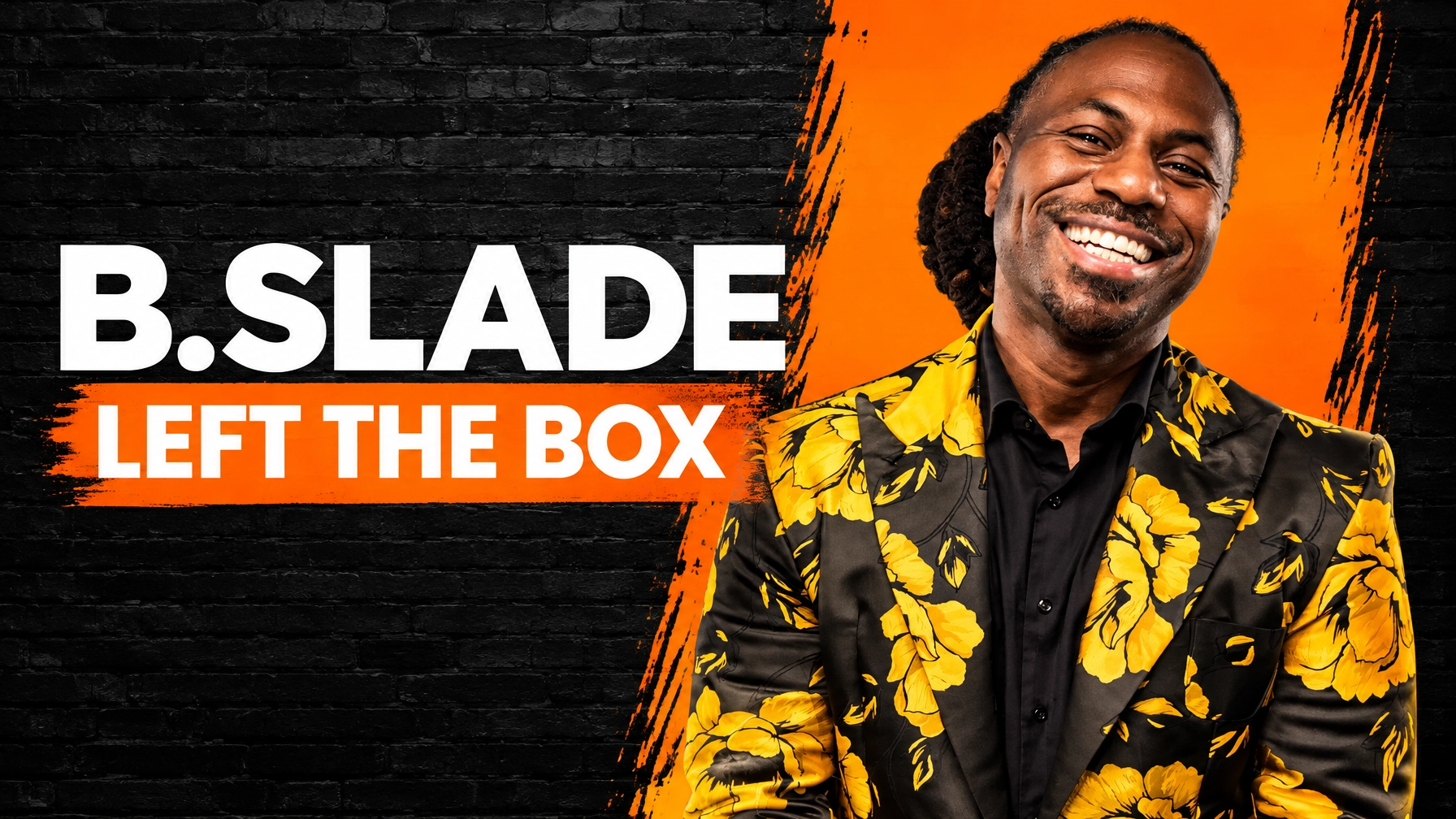
Black faith and culture has always held a tension between public witness and protected encounter. In Bonnerfide Conversations, that tension comes into focus through one hard question: what did the church lose when every service became content?
Something sacred was lost.
Not because cameras are evil.
Because not every move of God is meant for display.
What the Sanctuary Was Meant to Protect
B.Slade makes the case with unusual clarity. The sanctuary, for him, was the one place cameras could not see him, surveillance could not see him, and his phone was not his leash. That is not nostalgia talking. That is someone naming what protected space once felt like.
Then he sharpens the point.
He talks about the “deity of Disney.” Disney will not let you film at Aladdin, yet the church records everything. The comparison sounds simple at first. It is not. He is asking why entertainment corporations guard atmosphere more carefully than sanctuaries guard sacred encounter.
His answer is not anti-technology.
It is about discernment.
“However, this is a sanctuary.”
That line carries the whole burden of the argument. A sanctuary is not just a room with pews and lights. It is a place set apart. A place where vulnerability should not be turned into spectacle. A place where a person can break, weep, release, repent, or recover without wondering whether the moment will be clipped, reposted, mocked, or misunderstood.
That is why his hospital analogy lands with such force.
Everybody can come to the hospital. But only qualified hands go into the operating room.
The point is not exclusion for its own sake. The point is protection. Access and exposure are not the same thing. A church can welcome people without making every sacred moment public property.
B.Slade even offers a better way.
He proposes a Spirit-filled, discerning audio-visual crew. People mature enough to know what should and should not be seen. People who understand that documenting a service and exposing a soul are not the same act.
That distinction matters.
Especially now.

Bonnerfide Conversations, Black Faith and Culture, and the Cost of Exposure
This argument matters because black faith and culture has never been only about presentation. It has also been about refuge. The sanctuary was one of the last places where people could come undone before God without being managed by an algorithm or followed by a lens.
B.Slade warns that the breakthroughs would be so much more intense if people did not think they would be made fun of.
That line should stop us.
Because it means the issue is not just production value. It is trust. If people think their most vulnerable moment might become internet material, they will protect themselves. They will hold back. They will perform composure instead of surrender.
And then something deeper gets lost.
Deliverance.

B.Slade draws a clear line between the two. Praise can be visible. It can be musical. It can be structured. Deliverance is different. Deliverance is costly. It can be loud, messy, disorienting, and deeply private all at once. A church that has room for praise but no room for protected breakthrough has not solved a problem. It has hidden one.
That is where the second half of his argument comes in.
The Testimony the Church Stopped Making Room For
B.Slade does not only grieve the camera. He grieves the loss of testimony service.
His reasoning is pastoral and piercing. People can sound good and look good and still be bound because they cannot testify. In his words: “That’s why you’re depressed. You haven’t testified.”
That is not a throwaway line.
It is a theology of release.
Testimony does something performance cannot do. It lets ordinary people name what God has done in ordinary language. It takes faith out of abstraction and gives it a face, a voice, and a history. A lay member standing up to say what God brought them through can make God more accessible to the room.
If You did it for him, I know You’ll do this for me.
That is how testimony builds community. It turns one person’s survival into another person’s hope. It reminds the room that God still moves among people without microphones, titles, and platforms.
And sometimes, that kind of testimony can carry so much weight that you no longer need the choir or the preacher.
Not because order no longer matters.
Because encounter has already done the work.
Order Without Deadness
B.Slade is careful not to romanticize the past. That matters too.
He is not calling for chaos. He is not attacking the church. He is not even attacking cameras themselves. He is arguing for protected sacred space inside a church that still believes God likes order.
Line upon line.
Precept upon precept.
That is why this cannot be reduced to an anti-technology complaint. The question is not whether churches should use tools. The question is whether tools have started ruling spaces that once belonged to discernment. The question is whether order has become image management. The question is whether the need to capture everything has weakened the church’s ability to cover people while God is dealing with them.
That is a different concern.
And a necessary one.

What This Demands of Us
For readers living at the intersection of faith and culture, B.Slade’s argument reaches beyond church media teams and worship formats.
It asks whether we still know how to protect what is sacred.
It asks whether we have confused visibility with victory.
It asks what happens when a breakthrough is performed before it is processed.
Some things should be witnessed.
Some things should be covered.
Some things should be shared only after they have healed enough to be spoken.
That is not fear.
That is wisdom.
The conversation that sparked this reflection comes from this episode of Bonnerfide Conversations. A second part continues the broader discussion and turns toward B.Slade’s new music.
At Bonnerfide, we believe meaningful conversation should make room for both truth and protection.
Because faith is not content first.
And breakthrough is not a performance.
Leave a Reply